Sinharaja Tour from South Coast
Most people staying on Sri Lanka’s south coast spend their mornings watching the Indian Ocean. Blue whales breaking the surface off Mirissa. Fishing boats returning to Matara before dawn. The horizon wide open in every direction.
Sinharaja is two and a half hours away and it is the complete opposite of everything you have been looking at.
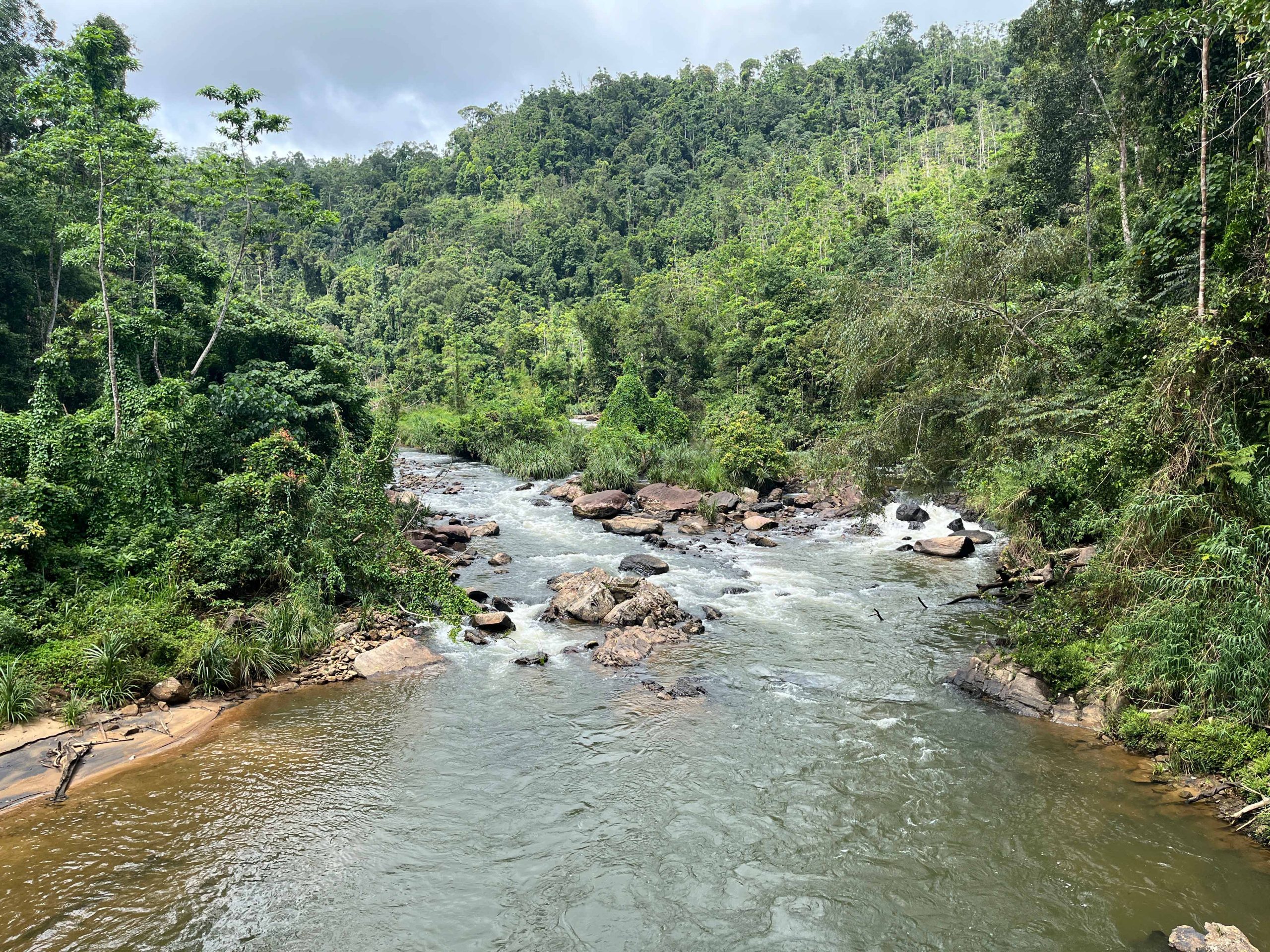
Instead of open water and sky, you are inside a forest so dense that the canopy closes above you within the first hundred metres of the trail. Instead of distance and space, the life here is immediate — on the bark of the tree beside you, in the leaf litter at your feet, calling from branches you cannot see.
Sri Lanka’s south coast has some of the most extraordinary marine wildlife on earth. Sinharaja has some of the most extraordinary terrestrial wildlife on earth. From your hotel, you can have both in the same day.
Pickup from Your Hotel
Achi collects you from your hotel anywhere along the south coast including Galle, Unawatuna, Ahangama, Weligama, Mirissa, and Matara at 5.30 AM – 6.00 AM. For guests who want a dedicated birdwatching experience targeting the dawn mixed-species bird waves, an earlier pickup can be arranged.
The drive follows the southern expressway before turning inland through Sri Lanka’s hill country. Rubber plantations give way to tea estates and the air cools as you climb. By the time you reach Deniyaya you are already in a different Sri Lanka from the one you left on the coast.
You arrive at the forest during the best wildlife hours of the morning. You return to your hotel on the south coast between 5.00 PM and 6.00 PM, with the rest of your evening free.
Inside the Forest
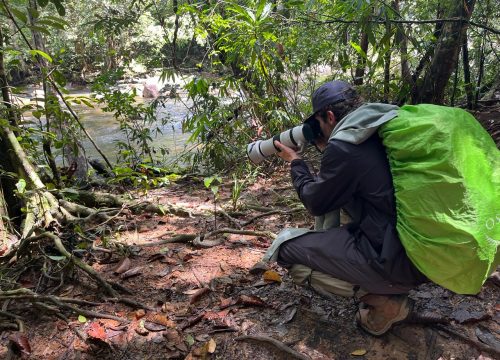
Sinharaja is not a safari park. There are no open vehicles, no fixed viewing platforms, no guaranteed sightings at predictable times. What it offers instead is something far less common, total immersion in a primary tropical rainforest that has been largely undisturbed for millions of years.
The forest works on its own logic. A mixed-species bird wave, a moving flock of 20, 30, sometimes 48 species travelling together through the canopy, can appear without warning and surround you completely. A Green Pit Viper coiled on a branch over a stream is easy to walk past without noticing and impossible to forget once you have seen it. A Purple-faced Langur troop moving through the upper canopy shakes the trees in a way that stops every conversation.
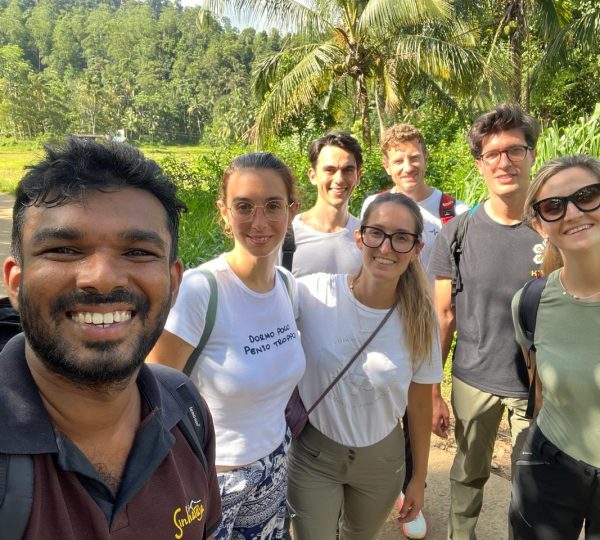
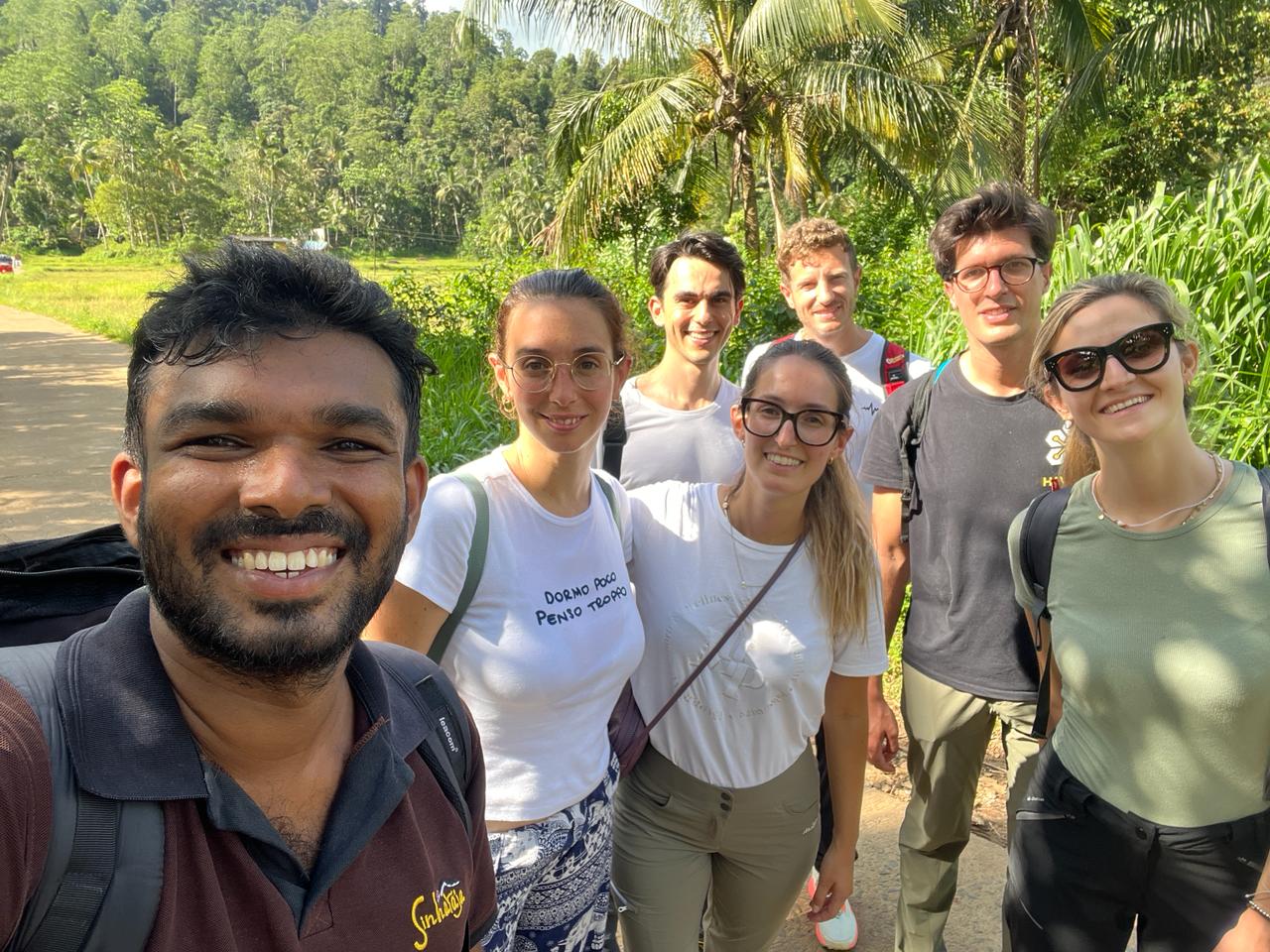
Achi has spent nine years learning how this forest behaves. He knows which trails are producing sightings, which entrance suits your interests, and how to read the forest’s signals well enough to find what most visitors miss entirely.
Kurulugala or Pitadeniya
The entrance is chosen based on what you want from the day.
Kurulugala Entrance sits at around 1,000 metres elevation, 12.8 km from Deniyaya. The trails are quieter, less visited, and excellent for unhurried nature walks and hikes through primary forest at elevation. The mixed-species bird waves here are exceptional and the cooler temperatures make for comfortable walking throughout the day. This is the entrance for serious birdwatchers, hikers, and anyone who wants the forest with as few other people in it as possible.
Pitadeniya Entrance is the main established entrance with well-maintained trails and reliable wildlife across all groups including birds, reptiles, mammals, and flora. It suits guests who want a broad first experience of what Sinharaja holds rather than a specialist focus.
Achi will recommend the right choice when you get in touch, based on your interests and what the forest is offering on your day.
What the South Coast Visitor Notices First
People arriving from the coast notice the sound before anything else. The ocean has a rhythm, wave after wave, the same pulse. Sinharaja has no rhythm. It is continuous, layered, coming from every direction at once. Insects, frogs, birds, the drip of moisture from leaves after rain. It takes ten minutes to begin distinguishing individual sounds from the overall roar of the forest being alive.
The second thing most visitors notice is the scale of the trees. Sinharaja’s canopy trees are not the palms and casuarinas of the southern beaches. Some of these trees have been growing for centuries. The buttress roots alone can be taller than a person.
By the time you are an hour into the trail, the south coast feels very far away.
Wildlife You May Encounter
The forest decides what you see on any given day but nine years of daily field experience means Achi reads Sinharaja’s patterns well. These are the animals that make the most impression on visitors arriving from the coast, where wildlife encounters tend to be large, distant, and oceanic.
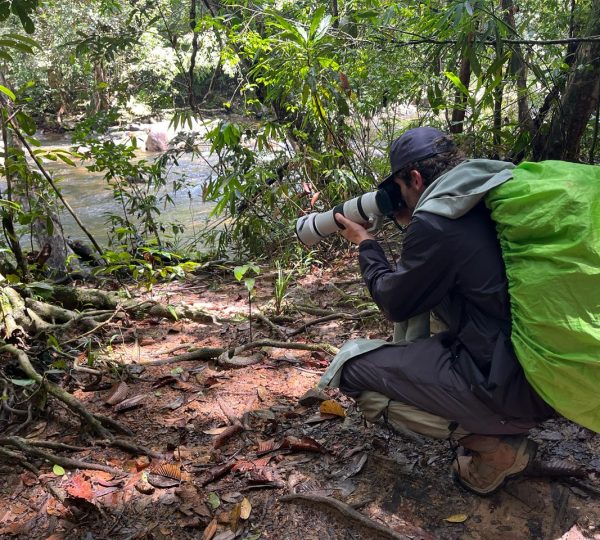
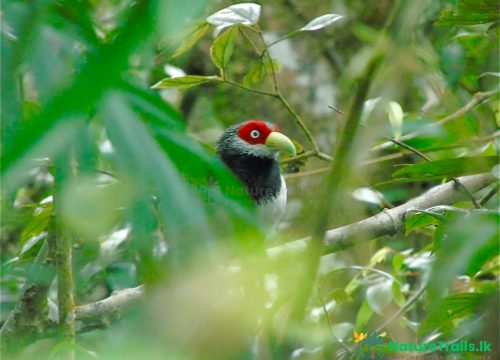
Birds — The mixed-species foraging flocks are the defining experience of Sinharaja birdwatching. Up to 48 species moving together through the canopy, close enough to observe in detail. Sri Lanka Blue Magpie, Sri Lanka Drongo, Sri Lanka Swallow, Orange-billed Babbler, and Yellow-fronted Barbet are among the endemic species regularly encountered. For guests specifically interested in birdwatching, tell Achi your target species when you book and the tour will be planned around them.
[Explore More About Endemic Birds]
[Explore More About Snakes of Sinharaja Rainforest]
[Explore More About Amphibians of Sinharaja Rainforest]
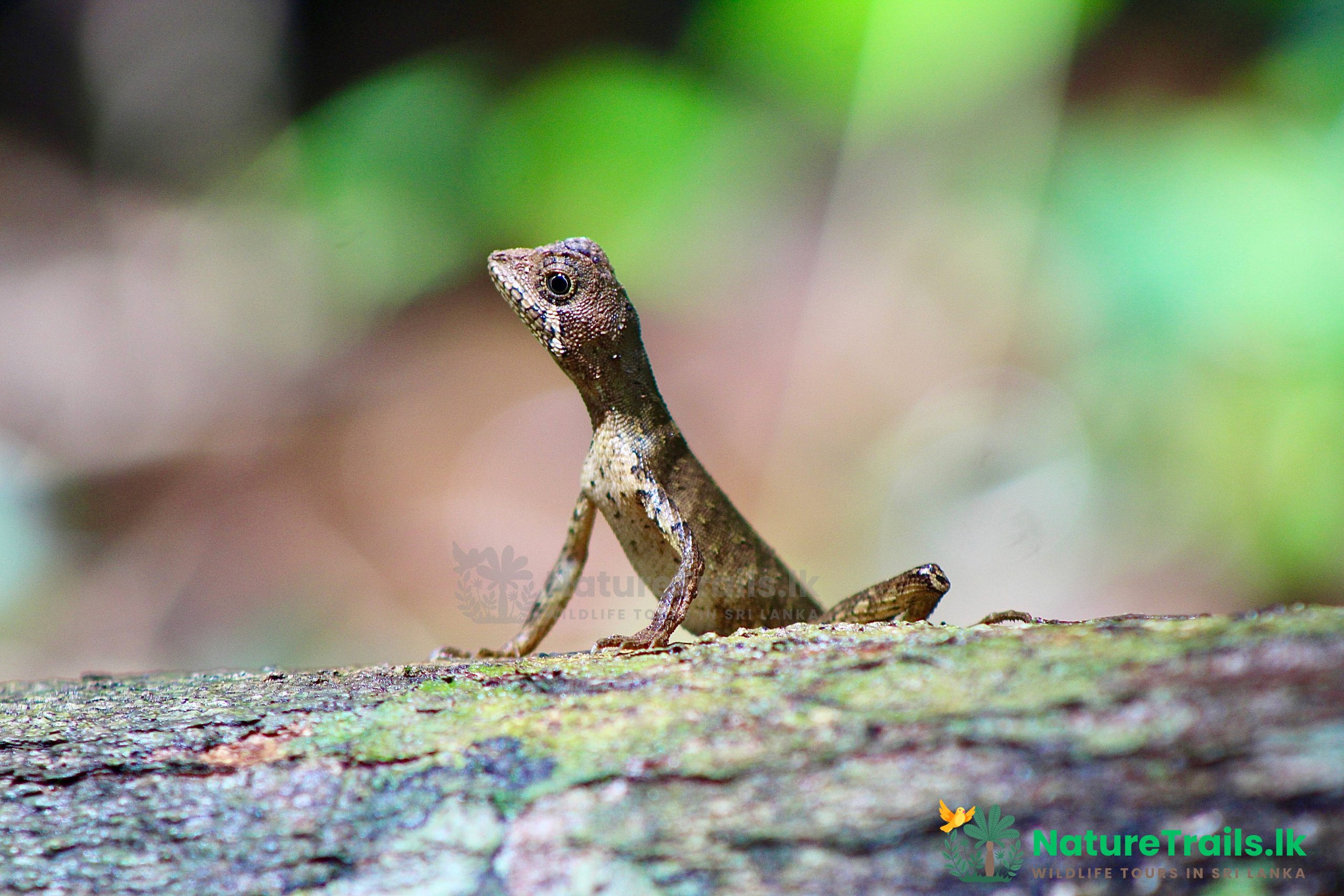
Reptiles — Green Pit Viper resting on low branches over streams, Hump-nosed Pit Viper in the leaf litter, Green Vine Snake threading through undergrowth, Sri Lanka Kangaroo Lizard on forest floor boulders. These are animals that reward slow, attentive walking, exactly the pace Sinharaja demands.
Mammals — Purple-faced Langur troops in the upper canopy, Toque Macaque, Sri Lanka Giant Squirrel moving through the mid-storey. Porcupine, Fishing Cat, and Leopard are present in the wider Sinharaja–Rakwana Hills system and encounters are rare but not unknown.
Amphibians — Sinharaja’s endemic shrub frogs and tree frogs are found nowhere else on earth. In the right conditions, the forest floor near streams produces extraordinary diversity.
What Is Included
- Private pickup from your hotel on the south coast including Galle, Unawatuna, Ahangama, Weligama, Mirissa, or Matara
- Expert naturalist guide throughout — Achi, SLTDA-certified, 9 years of Sinharaja field experience
- Forest entrance fees
- Packed lunch
- Bottled water
- Leech socks
- Return transfer to your accommodation
Practical Information
- Pickup time — 5.30 AM – 6.00 AM from your hotel. Earlier available for birdwatching tours.
- Return time — Approximately 5.00 PM to 6.00 PM
- Drive time — Approximately 2 to 2.5 hours each way
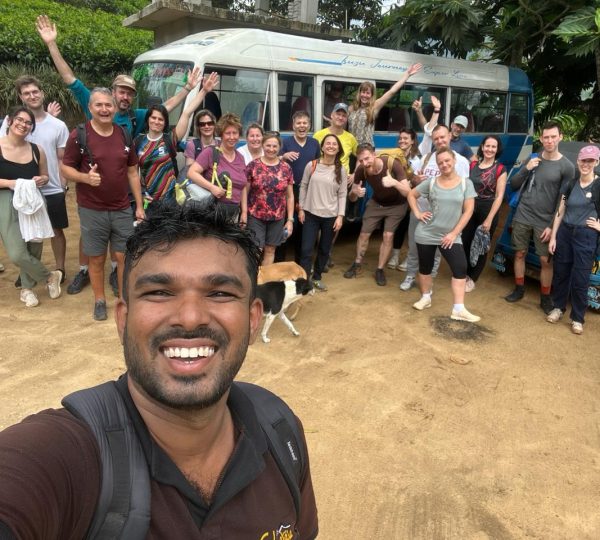
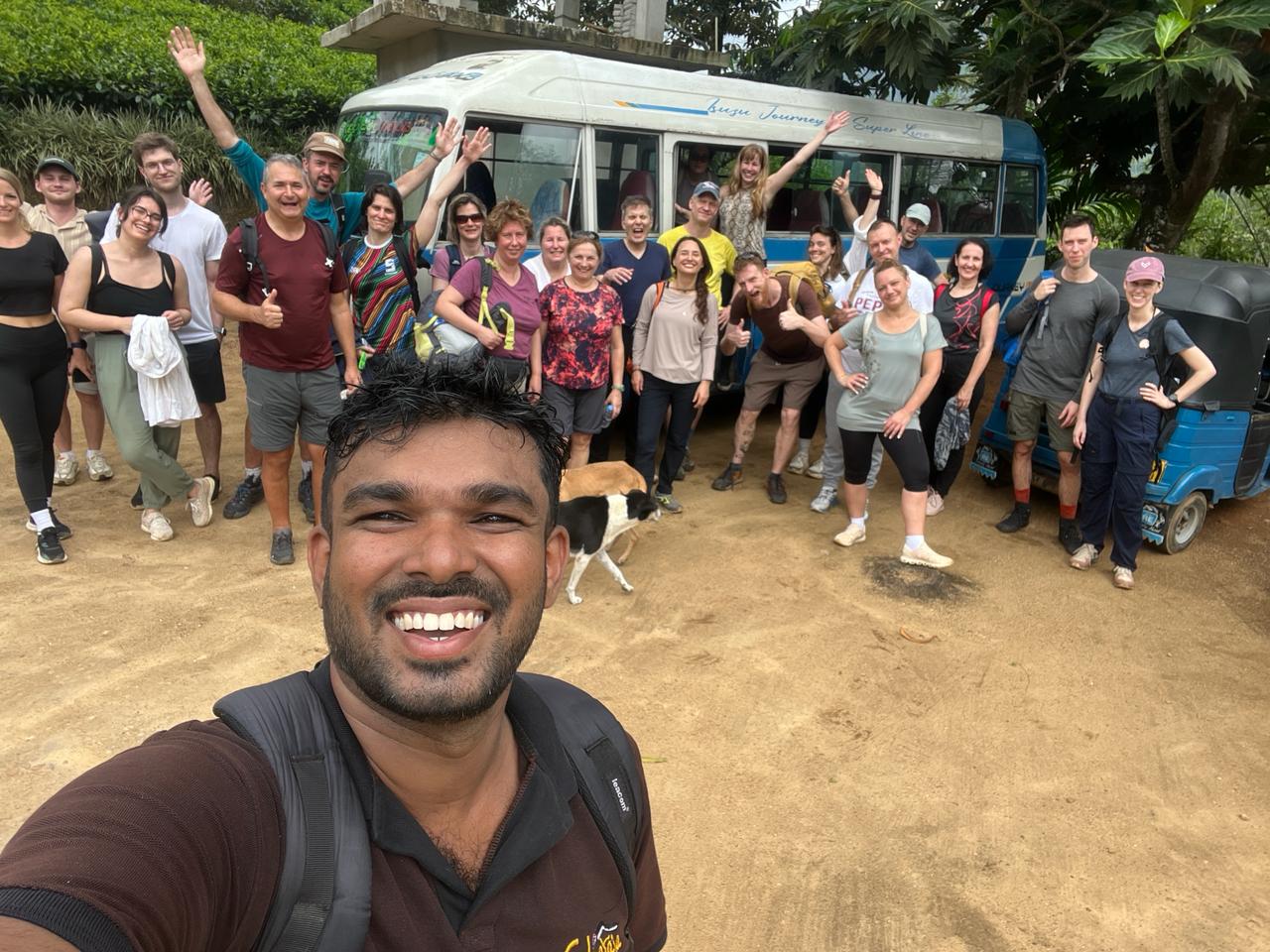
- Group size — Private, your group only, no strangers
- Fitness level — Moderate. Uneven forest trails with some inclines. No technical climbing.
- What to wear — Long lightweight trousers, any comfortable shirt, closed shoes or hiking boots. Avoid white or bright colours.
- What to bring — Binoculars if you have them, camera, rain jacket, swimsuits.
Book Your Sinharaja Tour from South Coast
Contact Achi directly via WhatsApp on +94 76 790 8897 or email info@naturetrails.lk. Mention where on the south coast you are staying and what you most want to see, whether birdwatching, reptiles, general wildlife, or a mix, and the tour will be planned around your priorities.