Visiting Sinharaja Rainforest, Everything You Need to Know Before You Go
Visiting Sinharaja Rainforest is unlike any other wildlife experience in Sri Lanka and I want to make sure you arrive prepared, with honest expectations and the right mindset.
I am Achi, a field naturalist, SLTDA-certified guide, and tourist guides lecturer with nearly nine years of daily experience in this forest. I have taken hundreds of visitors into Sinharaja like birdwatchers, herpetologists, wildlife photographers, families, researchers, and first-time jungle walkers. The ones who get the most from the experience are always the ones who came prepared and came with realistic expectations.
This guide tells you everything. Not the sanitised tourist version, the honest, practical reality of what you are walking into. Read it carefully before you book, and your experience will be infinitely better for it.
What Kind of Experience Is This?
Let me be direct about something most tour websites will not tell you.
Sinharaja is not a safari park. Animals do not walk out in front of you on a wide open track. This is dense, ancient, primary tropical rainforest. One of the last on earth and its wildlife is wild, secretive, and living entirely on its own terms.
What Sinharaja offers instead is something far more rare and valuable than a predictable wildlife encounter. It offers total immersion in one of the world’s most biodiverse ecosystems. Every step on the trail is surrounded by life, in the canopy above you, in the leaf litter at your feet, on the mossy bark of the trees beside you. You are not watching wildlife from a distance. You are inside it.
Wildlife can be found at any time and anywhere in the forest. Animals do not follow fixed schedules and that unpredictability is part of what makes every visit to Sinharaja genuinely different from the last. The pace is slow. The rewards go to those who stop, look carefully, and listen.
If you come to Sinharaja expecting guaranteed sightings of specific animals, you may be disappointed. If you come open to experiencing a living forest on its own terms, guided by someone who has spent nearly a decade learning its rhythms, you will leave with memories that serious wildlife travelers spend their whole lives chasing.
Choosing Your Entrance — Which One Is Right for You?
Sinharaja has several entry points and your choice genuinely affects your experience. Different entrances have completely different trail systems, forest characters, and wildlife opportunities. I always recommend discussing your specific interests with me before deciding. The right entrance for you depends on what you want to experience, and I can match you to the best option after a short conversation.
Here is an honest overview of each entrance.
Kurulugala Entrance
My top recommendation for most visitors and particularly for birdwatchers. Located approximately 12.8 km from Deniyaya at around 1,000 metres elevation, Kurulugala is the least disturbed of all Sinharaja’s entrances. The trails here are quieter, the forest is less impacted by visitor pressure, and the wildlife encounters are consistently more intimate as a result.
What makes Kurulugala exceptional for birdwatching is not just the elevation transition, where lowland and montane species overlap but the behaviour of the mixed-species foraging flocks here. While mixed-species flocks are most active in the morning throughout Sinharaja, at Kurulugala they are regularly encountered throughout the day, including midday, something that is rare at other entrances. For serious birdwatchers, this makes Kurulugala the best birdwatching entrance in the entire Sinharaja complex. Elevation-dependent endemics like Dull Blue Flycatcher, Sri Lanka White-eye, Yellow-eared Bulbul, Ashy-headed Laughingthrush are most reliably found here. Recommended for: serious birdwatchers, repeat visitors, wildlife photographers, anyone wanting the least disturbed forest experience.
Pitadeniya Entrance
The most established southern entrance, approximately 13 km from Deniyaya. Classic primary lowland rainforest with well-established trails and facilities at the Conservation Centre. The most commercially developed entrance, more visitor traffic than Kurulugala
Lankagama Entrance
Approximately 18.5 km from Deniyaya. A popular entrance known for its concentration of waterfalls, up to six can be visited in a single half-day. Recently opened access toward Lions Rock reveals new interior sections. More touristic in character than Kurulugala.
Not sure which entrance is right for you? Contact me before booking and I will recommend the best option based on your specific interests, fitness level, and available time.
What Will You Realistically See?
This is the question every visitor asks and the one most tour operators answer dishonestly.
The truthful answer is: wildlife can be found at any time and anywhere in the forest. Animals do not perform on schedule. What I can tell you from nearly nine years of daily observation is what is possible and what requires patience.
Birds
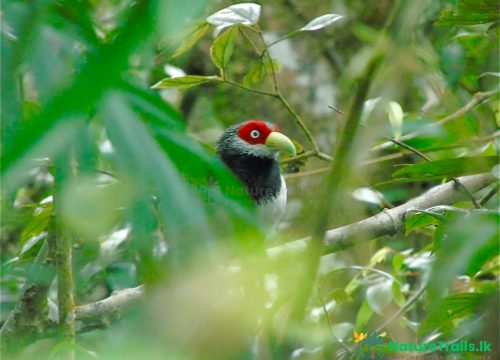
Birds are the most reliably encountered wildlife in Sinharaja. On a good day with an experienced guide, you can expect 40 to 70 species in a full day, including the majority of the commonly encountered endemic species. Mixed-species foraging flocks when found, produce extraordinary multi-species encounters in a single location. At Kurulugala, these flocks occur throughout the day, not only in the morning. Species like the Sri Lanka Blue Magpie, Sri Lanka Drongo, and many other endemics and residents can be encountered at any point during your visit depending on conditions, location, and the behaviour of the forest on that particular day.
[Book Sinharaja Birding Tour] [Explore More About Endemic Birds]
Reptiles and Amphibians
The Green Pit Viper is reliably encountered on most visits. Particularly on low branches over streams. The Kangaroo Lizard is commonly seen on the forest floor. Night walks produce the most diverse reptile and amphibian encounters, multiple frog species, Cat Snakes, and other nocturnal species become findable after dark in a way they simply are not during the day.
[Explore More About Amphibians]
Mammals
The Purple-faced Langur is the most reliably encountered mammal, troops are heard crashing through the canopy on most visits. The Sri Lankan Giant Squirrel is frequently seen near fruiting trees. Manage your expectations honestly and every mammal encounter becomes a genuine reward.
[Expolre Our Sinharaja Day Tour]
General Rule
The more time you spend inside the forest, the more you see. A half-day visit gives you a taste. A full day gives you a real experience. Multiple days across different entrances gives you Sinharaja properly.
What to Bring — The Honest Packing List
I have been asked this question by hundreds of visitors. Here is what genuinely matters in the field.
Essential
Closed shoes with good grip — Sturdy footwear with a solid grip is essential. The trails are wet and can be muddy in places. Rubber boots are also a good option and available locally. Ask me when booking and I will advise.
Long trousers — Essential for leech protection and trail vegetation. Any comfortable top is fine. There is no need for long sleeves as mosquitoes are not a concern inside the forest.
Swimsuit — Bring one. Sinharaja’s streams and waterfalls are beautiful, and depending on your entrance and trail, there may be opportunities to swim. You will be glad you brought it.
Sufficient water and packed lunch — I provide packed lunch, bottled water, and leech socks on all NatureTrails.lk tours. You do not need to bring these separately.
For Birdwatchers
Binoculars — Minimum 8×42. For canopy birdwatching, 10×42 is preferred. The birds are often in the upper canopy and impossible to appreciate with the naked eye.
Field guide — The Illustrated Checklist of the Birds of Sri Lanka is the recommended reference. Having it in hand helps you absorb and retain what you are seeing.
For Wildlife Photographers
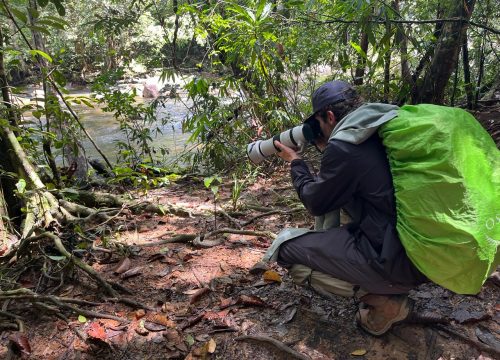
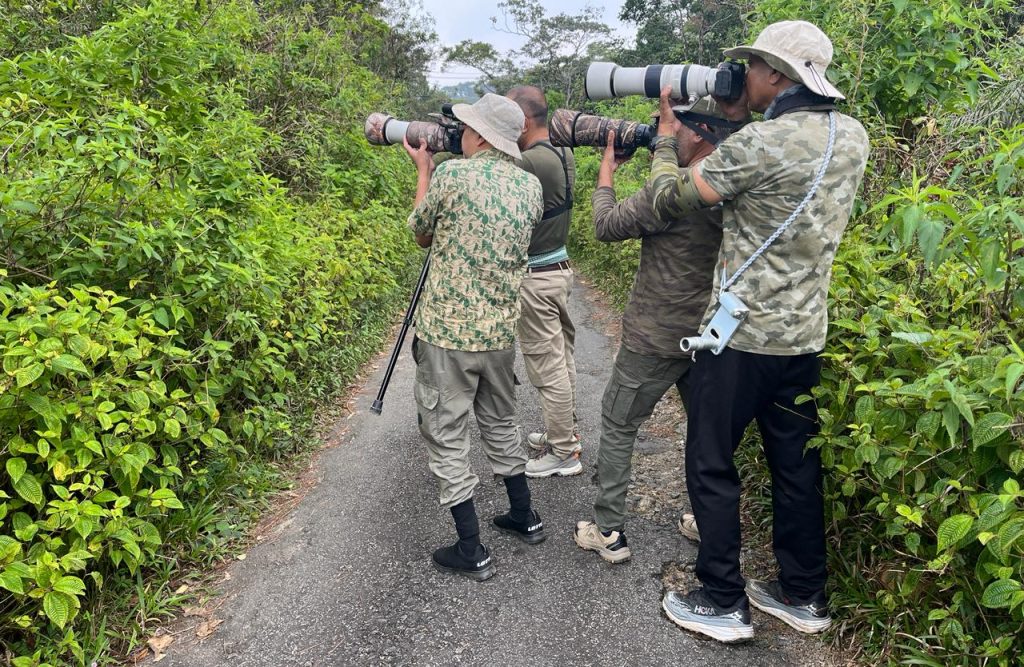
Telephoto lens — Minimum 300mm for bird photography. 500mm or longer is preferred for canopy species. A macro lens (90–105mm) is essential for reptile, amphibian, and insect photography.
Flash with diffuser — Essential for night photography of reptiles and amphibians. A diffuser prevents harsh reflections on scales and eyes.
Rain protection for gear — A waterproof cover for your camera bag. It will rain at some point. Plan for it
General
Rain jacket — Lightweight and packable. Brief showers are possible at any time.
Small daypack — To carry your camera and personal items comfortably.
Leeches — The Question Everyone Asks
Let me address this directly because almost every first-time visitor to Sinharaja asks about leeches and the anxiety around them is usually far greater than the reality.
Yes, leeches are present in Sinharaja. They are more active during and after rain and during the wet season months. They are small. Most are the size of a matchstick when inactive and they move toward warmth and movement. They are not dangerous. They are not painful. Most people do not feel a leech bite at all while it is happening.
The most effective prevention is simple. Leech socks pulled over your trouser legs and leech repellent on exposed skin. I provide both leech socks and leech repellent on all NatureTrails.lk tours. If a leech does attach, a drop of leech repellent removes it cleanly. The bite is tiny and heals within a day or two.
I have walked this forest nearly every day for nine years. Leeches are a minor inconvenience, a small price for one of the most extraordinary wildlife experiences on earth. Every visitor who has ever worried about them has told me afterwards that they were not as bad as expected.
Physical Difficulty — Is This Tour Right for You?
Here is the honest truth. Age does not matter. What matters is choosing the right entrance and the right trail for your specific situation.
Sinharaja has multiple entrances with completely different trail systems. From gentle, relatively flat paths through lowland forest to more demanding terrain at higher elevations. I discuss your fitness level, experience, and any physical considerations with every visitor before booking and I always recommend the entrance and trail that will give you the best experience for your specific situation.
Even younger children regularly complete longer trekking days in Sinharaja when matched to the right trail. Older visitors with good general fitness enjoy full day tours comfortably. The key is not your age or fitness level in absolute terms. It is honest communication before we go in, so I can design the right experience for you.
If you have any concerns about physical suitability, contact me before booking. A short conversation will tell us everything we need to know.
Stay at Nature Trails Lodge — Right in the Heart of Sinharaja
For the best possible Sinharaja experience, I recommend staying at Nature Trails Lodge,my own guest house, centrally located within easy access of all Sinharaja’s entrances.
Staying here means you are inside the forest’s soundscape from the moment you wake. Dawn arrives with birdsong rather than traffic. You can enter the forest at first light without a long drive. Between tours, the lodge’s natural setting, surrounded by trees and wildlife, means the Sinharaja experience does not end when you leave the trail.
The central location gives you flexibility that no other accommodation in the area offers. Kurulugala, Pitadeniya, and Lankagama entrances are all easily accessible, making multi-entrance, multi-day visits straightforward to plan.
Contact me for accommodation availability and rates alongside your tour booking.
Rules and Etiquette in the Forest
Sinharaja is a UNESCO World Heritage Site and a legally protected forest reserve. The following rules apply to all visitors.
You must be accompanied by a licensed guide at all times. This is both a legal requirement and a practical necessity.
No collection of any kind. No plants, no animals, no insects, no soil, no rocks. Nothing is removed from the forest.
No disturbance to wildlife. We observe animals in their natural state. We do not handle, chase, or deliberately stress any animal.
Minimal noise. Speak quietly. Move slowly. The forest rewards patience and stillness.
No littering. Everything you bring in, you carry out.
Photography ethics. Wildlife photography is welcome and encouraged. But don’t use flash toward animals.
A Full Day in Sinharaja — What It Actually Looks Like
Pre-dawn pickup or meeting point We meet at the agreed location before first light. I use the drive to the entrance to brief you on the day, what we are likely to encounter, what to look for, and how to move in the forest.
Forest entry at dawn We enter at first light. The air is cool, the canopy is alive with sound, and the forest is at its most atmospheric. The quality of early morning light through the rainforest canopy is something photographers travel from across the world to experience.
Forest walk — wildlife at any time We move slowly through the forest, stopping frequently. I am listening and watching constantly, for bird calls, for movement in the canopy, for the rustle of a lizard in the leaf litter. Wildlife can appear at any moment and from any direction. At Kurulugala, mixed-species foraging flocks can be encountered throughout the day. Not only in the morning which means the excitement of a full flock encounter is possible at any point during your visit.
Rest and lunch We find a comfortable spot often near a stream for a rest and packed lunch provided by NatureTrails.lk. This is when visitors often have their most relaxed wildlife encounters. Animals become habituated to our stationary presence and may approach more closely.
Stream time Depending on your entrance and trail, there may be opportunities to wade or swim in Sinharaja’s clear forest streams. Bring your swimsuit. These are moments that become highlights of any visit.
Forest exit and debrief We exit the forest and I run through the full species list of everything we encountered. For birdwatchers, this is when the checklist gets completed and any identification queries are resolved.
Frequently Asked Questions
Is Sinharaja safe to visit? Yes. The forest poses no serious danger to visitors who follow their guide’s instructions. In nearly nine years of daily guiding, I have never had a serious safety incident with any visitor.
Can I visit Sinharaja without a guide? No. Entry to the forest interior requires a licensed guide by law. Beyond the legal requirement, attempting to navigate and interpret a forest of this complexity without specialist knowledge would result in a significantly poorer experience.
How much does a tour cost? Contact me directly for current pricing. Tour costs depend on duration, entrance choice, and specific requirements. I provide transparent, detailed quotes with no hidden fees. Packed lunch, bottled water, and leech socks are included in all tours.
How do I get to Sinharaja? Sinharaja is located in southwestern Sri Lanka, approximately 3 to 4 hours from Colombo by road. The nearest town is Deniyaya. I can advise on transport arrangements when you book or arrange pickup from your current location. For the most convenient access to all entrances, I recommend staying at Nature Trails Lodge.
What is the best time of year to visit? December to March is the best overall period. Dry conditions and peak bird activity. July to August offers a secondary drier window. The forest is productive year-round. Contact me to discuss what to expect during your specific travel dates.
Can I combine Sinharaja with other Sri Lanka destinations? Absolutely. Sinharaja pairs naturally with Yala National Park, Horton Plains, Bundala, or the Cultural Triangle. I can advise on itinerary design for a complete Sri Lanka wildlife trip.
How far in advance should I book? At least two to four days in advance, particularly for December to March peak season. Contact me as soon as your travel dates are confirmed.
What if it rains during my tour? It is a rainforest and rain is part of the experience. Light rain actually improves reptile and amphibian activity significantly. I will always discuss conditions with you before we enter and adjust plans accordingly.
Which entrance should I choose? Contact me before deciding. Different entrances have completely different trails and wildlife opportunities. A short conversation about your interests and expectations will tell me exactly which entrance is right for you.
Visiting Sinharaja Rainforest
Sinharaja Rainforest is one of the great wildlife destinations on earth. Visiting it properly with the right preparation, the right entrance, and the right guide is an experience that stays with you for the rest of your life.
I would be glad to take you in.