Sinharaja Birdwatching Tours with an Expert Naturalist (One Day or Multiple Days)
In my honest opinion, Sinharaja is one of the finest birdwatching destinations on earth. Not just in Sri Lanka. On earth. I am Achi, a field naturalist, SLTDA-certified guide and tourist guides lecturer with nine years of dedicated study in this forest. Birds were what first drew many of my guests here. Birds are what bring most of them back.
What makes birding in Sinharaja different is not just the numbers, though the numbers are extraordinary. It is the density of endemism, the phenomenon of the mixed-species flocks, and the quality of encounter you get when you are standing inside dense intimate forest at eye level with some of the most spectacular birds in Asia. Sinharaja birding pulls you in completely.
This is a Sinharaja Birdwatching tour tailored to your group. Contact us via WhatsApp to discuss pickup arrangements.
[Explore More About Endemic Birds]
Why Sinharaja is Sri Lanka’s Most Important Birding Destination
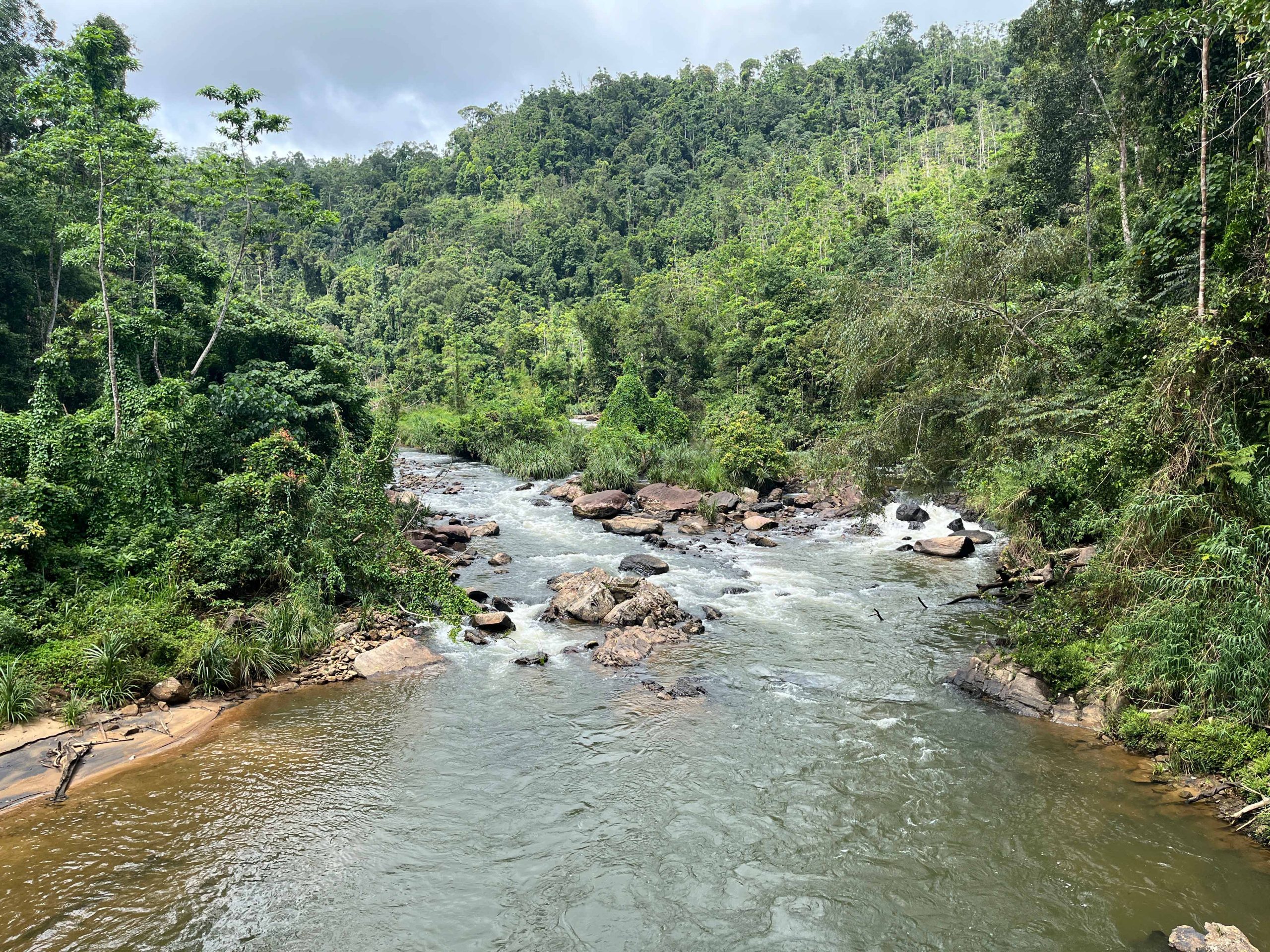
Sinharaja Rainforest is a UNESCO World Heritage Site in southwestern Sri Lanka. Of Sri Lanka’s 35 endemic bird species, 32 are found here. No other single location in the country offers this concentration of endemism in one accessible forest.
Over 200 bird species have been recorded within the reserve, spanning residents, seasonal migrants and altitudinal migrants moving between the lowland forest and the Rakwana Hills above. The forest’s elevation range from around 100 metres to 1,385 metres creates overlapping habitat zones that support species found nowhere else in Sri Lanka.
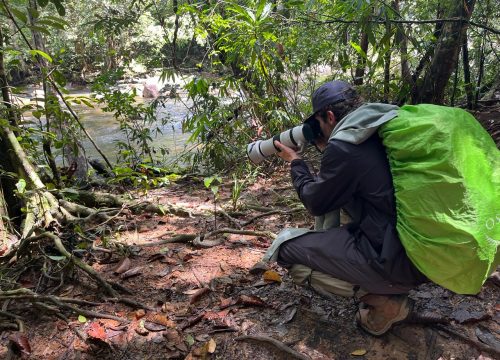
But the statistics only tell part of it. What makes Sinharaja genuinely extraordinary for birdwatchers is the quality of the experience. This is dense, intimate forest. You are not scanning distant treetops from a jeep. You are standing inside the habitat at eye level with some of the most spectacular endemic birds on earth, watching them behave naturally.
The Mixed Species Bird Flocks, Sinharaja’s Greatest Wildlife Spectacle
If there is one thing I want every visitor to experience before anything else, it is the mixed-species foraging flocks.
Sinharaja is world-renowned for these. They are dynamic assemblages of multiple bird species moving together through the forest canopy in coordinated feeding movements. A full flock encounter can involve anywhere from 15 to 48 species simultaneously, one of the largest mixed-species flock events recorded anywhere on earth.
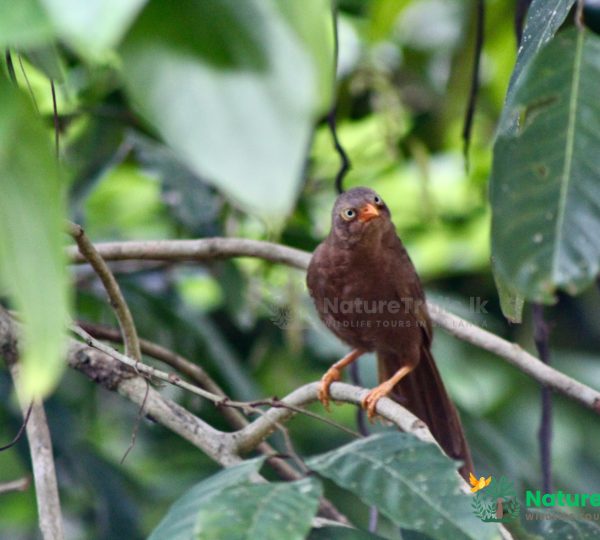
The flocks are led by two endemic species, the Sri Lanka Drongo and the Orange-billed Babbler, whose calls draw in species from the surrounding forest. Flycatchers drop from the canopy, babblers emerge from the understorey, malkohas materialise from dense vegetation. The result is birds appearing from every direction at once.
I have watched this happen thousands of times. It never becomes routine. When a full flock passes through, even experienced birders cannot process it all fast enough. You lock onto one species with your binoculars and three more appear beside it.
Flocks are most active between 6.30 and 9.00 in the morning. Knowing where the resident flock territories are, which trails they favour, which sections of forest they move through on a given morning, makes the difference between finding a flock and missing one entirely. That is local knowledge that no field guide can give you.
Endemic Birds You Can See in Sinharaja Birdwatching Tours
I have organised the endemic birds into four groups based on how you are most likely to encounter them. The full detailed accounts are in the Sri Lanka Endemic Birds Field Guide. This is a practical summary for planning your birdwatching tour.
Group 1: Mixed Flock Species These are the endemics most reliably encountered when a mixed-species foraging flock is active. On a good flock morning you may see most of these in a single two-hour window.
Sri Lanka Drongo (Dicrurus lophorinus), Orange-billed Babbler (Argya rufescens), Ashy-headed Laughingthrush (Argya cinereifrons), Sri Lanka Scimitar Babbler (Pomatorhinus melanurus), Red-faced Malkoha (Phaenicophaeus pyrrhocephalus), White-faced Starling (Sturnornis albofrontatus), Red-backed Flameback (Dinopium psarodes), Crimson-backed Flameback (Chrysocolaptes stricklandi).
Group 2: Endemics Species you are likely to encounter independently of the flocks in the right habitat and time of day.
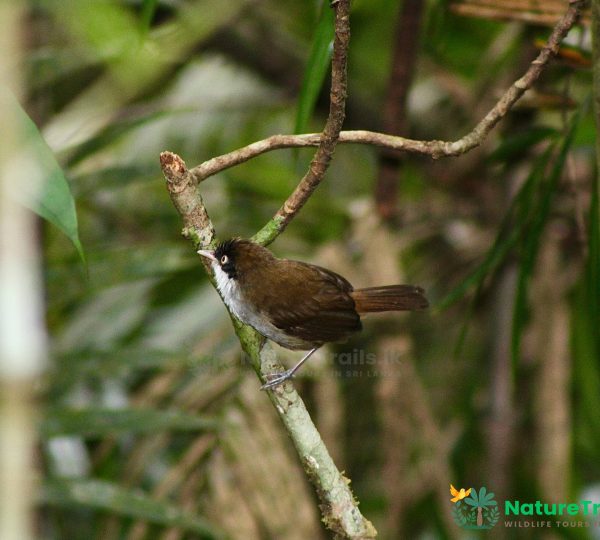
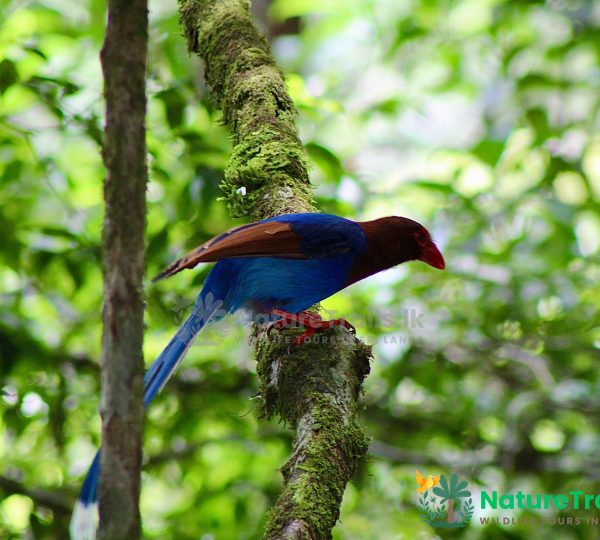
Sri Lanka Blue Magpie (Urocissa ornata), Spot-winged Thrush (Geokichla spiloptera), Brown-capped Babbler (Pellorneum fuscocapillus), Sri Lanka Hanging Parrot (Loriculus beryllinus), Sri Lanka Swallow (Cecropis hyperythra), Yellow-fronted Barbet (Psilopogon flavifrons), Crimson-fronted Barbet (Psilopogon rubricapillus), Sri Lanka Grey Hornbill (Ocyceros gingalensis), Sri Lanka Junglefowl (Gallus lafayettii), Sri Lanka Myna (Gracula ptilogenys), Sri Lanka Green Pigeon (Treron pompadora), Sri Lanka Wood Pigeon (Columba torringtoniae), Black-capped Bulbul (Rubigula melanictera), White-throated Flowerpecker (Dicaeum vincens), Layard’s Parakeet (Psittacula calthrapae), Chestnut-backed Owlet (Glaucidium castanotum).
Group 3: Location and Habitat Specific These species require the right entrance, elevation zone or specific microhabitat. Several are most reliably found at Kurulugala.
Sri Lanka White-eye (Zosterops ceylonensis), Dull-blue Flycatcher (Eumyias sordidus), Yellow-eared Bulbul (Pycnonotus penicillatus).
Group 4: Rare and Condition Dependent These require patience, specific timing or genuine fieldcraft. They are the birds serious listers come back to Sinharaja for.
Green-billed Coucal (Centropus chlororhynchos), Sri Lanka Spurfowl (Galloperdix bicalcarata), Sri Lanka Thrush (Zoothera imbricata), Sri Lanka Whistling Thrush (Myophonus blighi), Serendib Scops Owl (Otus thilohoffmanni).
For full species accounts, field notes and honest encounter tips for every endemic on this list, read the complete Sri Lanka Endemic Birds Field Guide: [link]
Other Notable Species
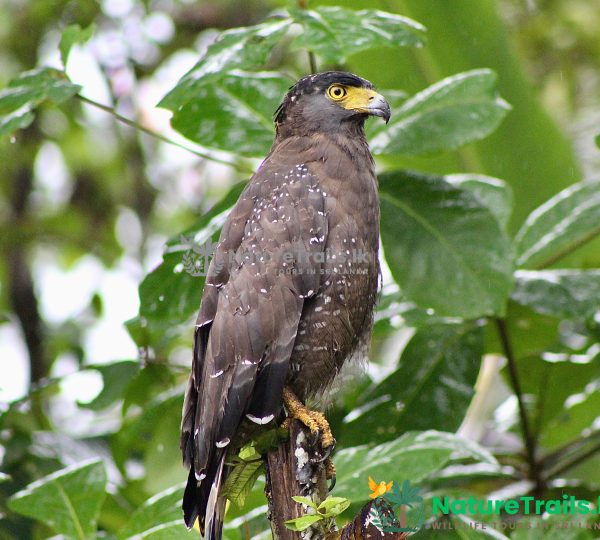
Beyond the endemics, Sinharaja supports a rich diversity of resident species such as malabar trogan, woodpecker species, flycatchers, warblers, sunbirds, raptors, and the Seasonal migrants add further variety between July and April.
A full birding day in Sinharaja with an experienced guide regularly produces more than 50 species. Some dedicated dawn-to-dusk days have exceeded that significantly.
Day Tours vs Multi-Day Birdwatching Experiences
One Day Birdwatching Tour
A full day starting at first light gives you a genuine and thorough introduction to Sinharaja’s birdlife. We target the mixed-species flocks during the peak morning hours and then move through different habitat types as the day develops. One day in good conditions is enough to see the majority of the commonly encountered endemics.
Multi-Day Birdwatching Expeditions
For serious birders building their Sri Lankan endemic checklist, or anyone wanting to go beyond the well-known species into the rarer and more elusive birds, a multi-day stay in the Sinharaja area is the right approach. Multiple days let us enter the forest at true dawn before other visitors arrive, cover different entry points and elevation zones, return to specific locations for target species that need more than one attempt, and run evening sessions from your accommodation.
About Your Guide
I hold a First Certificate in Ornithology from the University of Colombo. I have guided professional ornithologists, wildlife photographers and dedicated listers from around the world, many of whom arrived with their own deep knowledge and left having seen birds they did not expect.
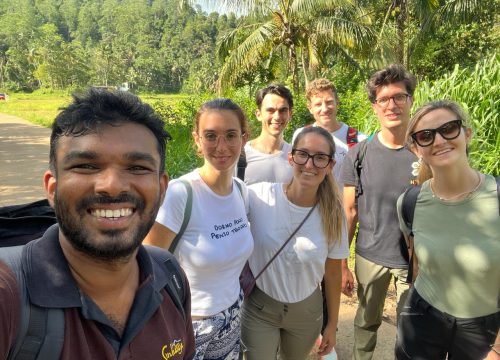
Every tour I run is private. Small groups of two to four people see dramatically more than larger groups. We move quietly, stop frequently and always let the forest set the pace.
[Meet Achi in full]
Tour Details of Sinharaja Birdwatching Tours
- Duration: Depends on your requirements.
- Inclusions: Well-experienced naturalists, packed breakfast, bottled water, entrance fees, and all taxes and fees
- Meeting Point: Depends on the entrance
- End Point: The tour ends at the meeting point
- Pickup Details: Please get in touch with us for arrangements
- Confirmation: Provided after finalizing details
- Private Tour: Personalized experience for your group
It’s time to book your Sinharaja Birdwatching Tours with NatureTrails.lk. Contact us via +94767908897 or info@naturetrails.lk for more information